Connected Driving
A safe bet: why connected safety is taking over software defined vehicles
Maja Stefanovic — 05 June 2025
2 min read
12 June 2023
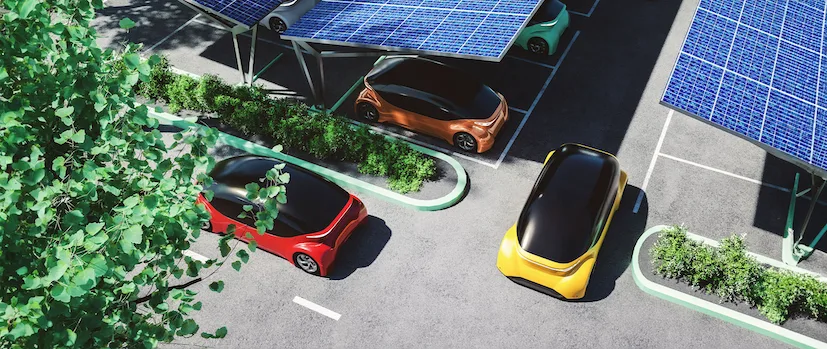
With 26 million electric vehicle (EV) sales expected by 2030, EV sales are growing rapidly. Driven by factors including increased gas price sales, uptake has shot up in recent years. There were 6.6m global EV sales in 2021, compared to 120K in 2012.
This has taken the by surprise. In some cases, forecasts have been revised upwards to accommodate their newfound popularity.
But if we are to reach the target of 60% of total vehicle sales by 2030, what are the challenges that remain? This is what the International Energy Agency estimates is needed if we are to reach net zero emissions by 2050. To meet this goal, obstacles persist, including the need for new battery technologies and diversification in the minerals used to produce them.
Most importantly, we will need many more charge points. The European Commission estimates 16.3 million charge points will be needed in the region by 2030 to accommodate predicted growth. That is a lot of infrastructure when you consider the 2020 figure was just 225,000.
For those who have never driven an EV, range anxiety is the main reason for doubt. Not only are there not enough charge points, but many are unreliable. One in five attempts to charge in the US failed last year, for example. There are also a lot of factors that can cause range to vary, including temperature. Automakers are also typically inaccurate when they attempt to predict the range of their EVs.
The answer is data, routing tools and machine learning. Products such as HERE EV Routing can alleviate this uncertainty, conflating various data points to update drivers in real-time as to when and where they can charge their vehicle, and how long it will last on the current charge, to a high degree of accuracy.

Beth McLoughlin
Share article

Maja Stefanovic — 05 June 2025
Maja Stefanovic — 28 May 2025
Ian Dickson — 22 May 2025
Get the latest on location technology, AI innovation and HERE product updates delivered straight to your inbox.
What you'll get:
Expert insights on agentic AI, spatial reasoning and location technology
Early access to HERE product updates, demos and resources
Practical guidance on building location-aware AI that works in the real world